17/20
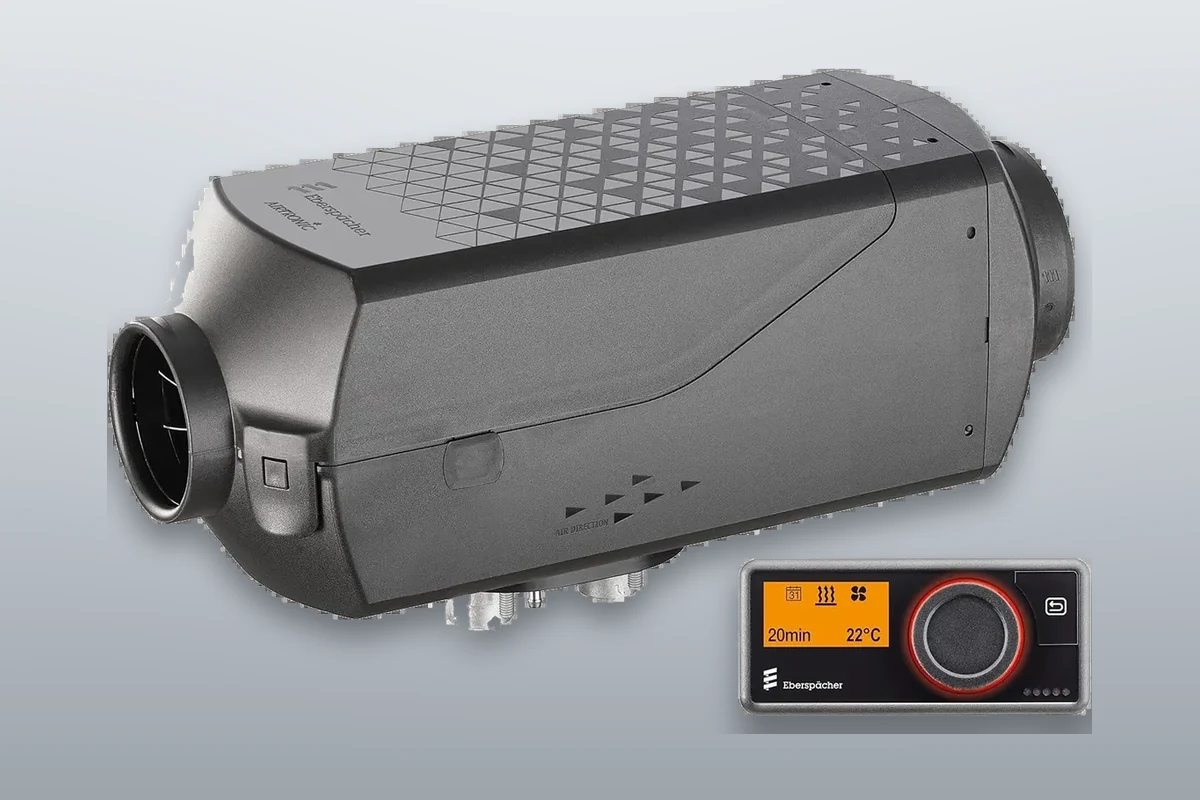
Espar Airtronic AS3 D2L (0.5 US gal) 12V (17/20)
Top-tier pick at 17/20. The one to beat in winter gear.
Guide
Bunk heater vs APU vs 12V blanket — what keeps a sleeper warm through a −30°C night, what each option burns, and what it asks of your batteries.
Updated October 20, 2026
Idling a big diesel all night to stay warm is the most expensive blanket ever sold. A diesel air heater — the same technology that's heated European truck cabs for decades — burns a thimble of fuel per hour and keeps the sleeper genuinely comfortable down to -40°C.
A heavy truck at idle burns roughly 3 litres of diesel per hour. Across a 10-hour rest period that is on the order of 30 litres a night — every night, all winter, converted directly into noise and exhaust at the truck stop. It also wears the machine doing it: extended idling loads the aftertreatment system with soot, dilutes engine oil, and shortens service intervals, because a diesel is designed to work under load, not lope all night to keep a bunk warm.
Then there is the legal layer. Many Canadian municipalities restrict idling to a few minutes at a time, and fleets increasingly track idle percentage whether or not a bylaw applies. Idling remains the fallback every driver should have — engines are reliable, and on the coldest night of the year a running engine is never the wrong answer. It is simply the plan no driver should rely on as the first choice. The fuel math, for anyone who wants to run their own numbers, is in the winter idling guide.
A diesel-fired air heater — Webasto and Espar are the names heard most in truck stops — is a small furnace plumbed into the sleeper. It draws diesel from the truck's own tanks, burns it in a sealed combustion chamber, vents the exhaust outside, and blows heated air into the bunk. Fuel use is tiny: roughly a tenth to two-tenths of a litre per hour, a rounding error beside idling. Electrical draw is modest too — a couple of amps once running, after the glow plug's startup draw — so the starting batteries wake up healthy.
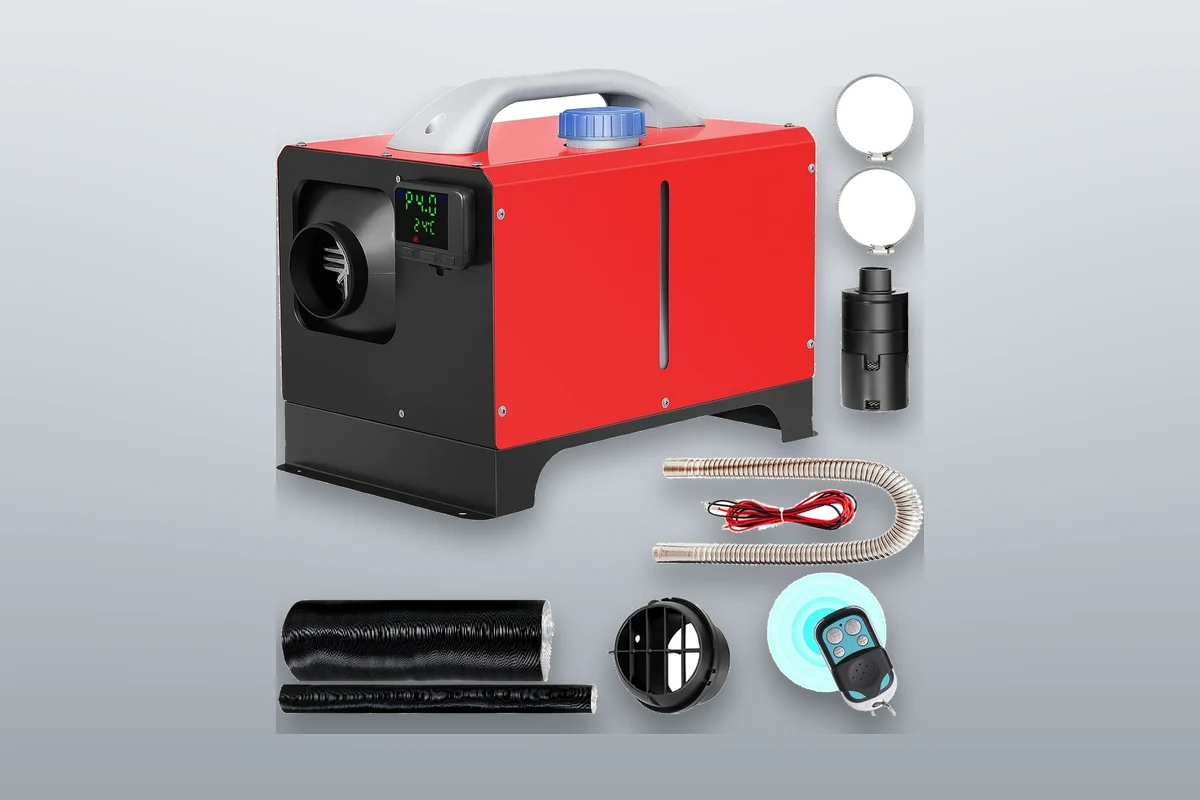
A properly installed heater holds a sleeper at a comfortable temperature through a −30°C night on the Prairies or a January shutdown on Highway 11 in northern Ontario, and it pre-warms the cab before a morning departure on the Coquihalla. For trucks bought without a factory unit, all-in-one diesel air heaters package the furnace, tank, and controls in a single box. The VEVOR 8 kW 12V diesel air heater (all-in-one) is the catalogue's entry here, with an honest caveat carried straight from its review: real heat off-grid — install it right or don't install it. Check price on Amazon. Combustion appliances demand correct exhaust routing and a sealed install; a sloppy install is worse than no heater.
Two maintenance rules decide whether a bunk heater is a plan or a decoration:
Top-tier pick at 17/20. The one to beat in winter gear.
An 8kW diesel air heater in one box. Real heat off-grid — install it right or don't install it.
Plan a full day if you're handy, or budget for a shop install. You need: a fuel pickup (standpipe in the tank or a separate small tank), 12V power, an exhaust route through the floor, and a combustion air intake. The all-in-one units simplify this — everything lives in one box — at the cost of taking up cab space and being harder to service.
The most expensive heat is the heat you burn diesel to make by idling.
An auxiliary power unit is a small diesel engine mounted on the frame rail that generates electricity and heat without running the main engine. It charges the batteries, runs the cab HVAC, and powers the hotel load — fridge, microwave, devices — while burning a fraction of what idling burns. It also solves the overnight battery-drain problem in the same stroke, because the batteries are being charged while everything runs.
The honest trade-off is commitment: an APU is a major installed system with its own maintenance schedule, not an accessory. APUs make sense for owner-operators running year-round and fleets spec'ing trucks from new. A company driver whose truck has one should learn its controls before the first cold snap; a driver whose truck does not have one is not the person who decides to add it. Where an APU exists, it is the most complete answer on this page. Where it doesn't, the bunk heater covers the heat for a small fraction of the complexity.
A 12V heated blanket draws roughly 45 to 50 watts — about 4 amps — and warms the person under it rather than the air around them. That distinction matters. On a night when the bunk heater is keeping up, the blanket is unnecessary; on the night the heater quits somewhere north of Wawa, the blanket is the difference between sleeping and shivering until dawn. It is also the right tool for the shoulder hours — warming the bunk before sleep, then switching off.
The catalogue carries two: the 12V heated blanket is the survival-essential pick, and the Camco 12V heated blanket, 59 × 43 in is the simpler-thermostat alternative sized for a bunk. Check price on Amazon. The full comparison lives in the best 12V heated blankets guide.
Two rules, both non-negotiable:
And remember what a blanket does not do: the cab itself still cold-soaks, so drinks, electronics, and food still face the full freeze — that side of the night is covered in what freezes in a parked cab.
A portable power station changes the blanket math usefully. Run the blanket off a station instead of the starting batteries and the truck wakes up with full cranking power no matter how the night went. A station in the class of the EcoFlow RIVER 2 Pro (768Wh) can carry a blanket's modest draw through a full rest break, with capacity left for devices. Check price on Amazon.
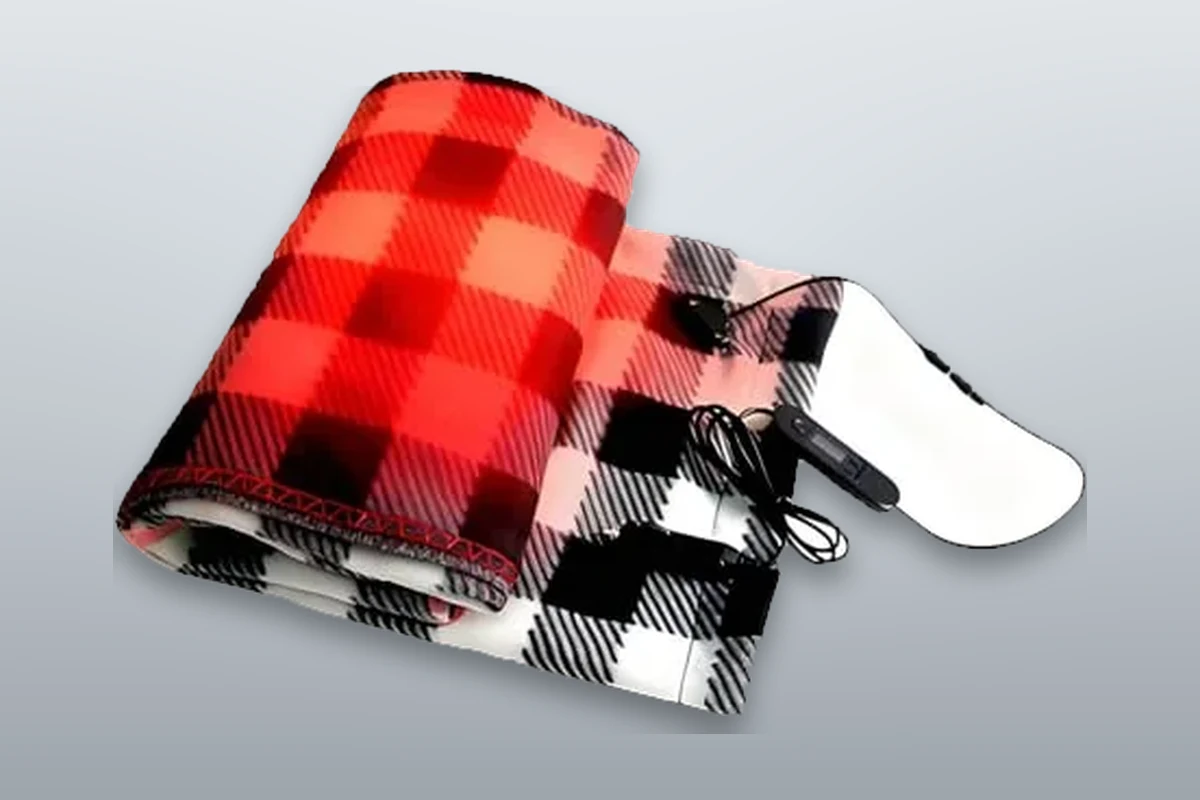
A 12V heated blanket is the cheapest honest fix for a cold bunk. The survival-essential pick.
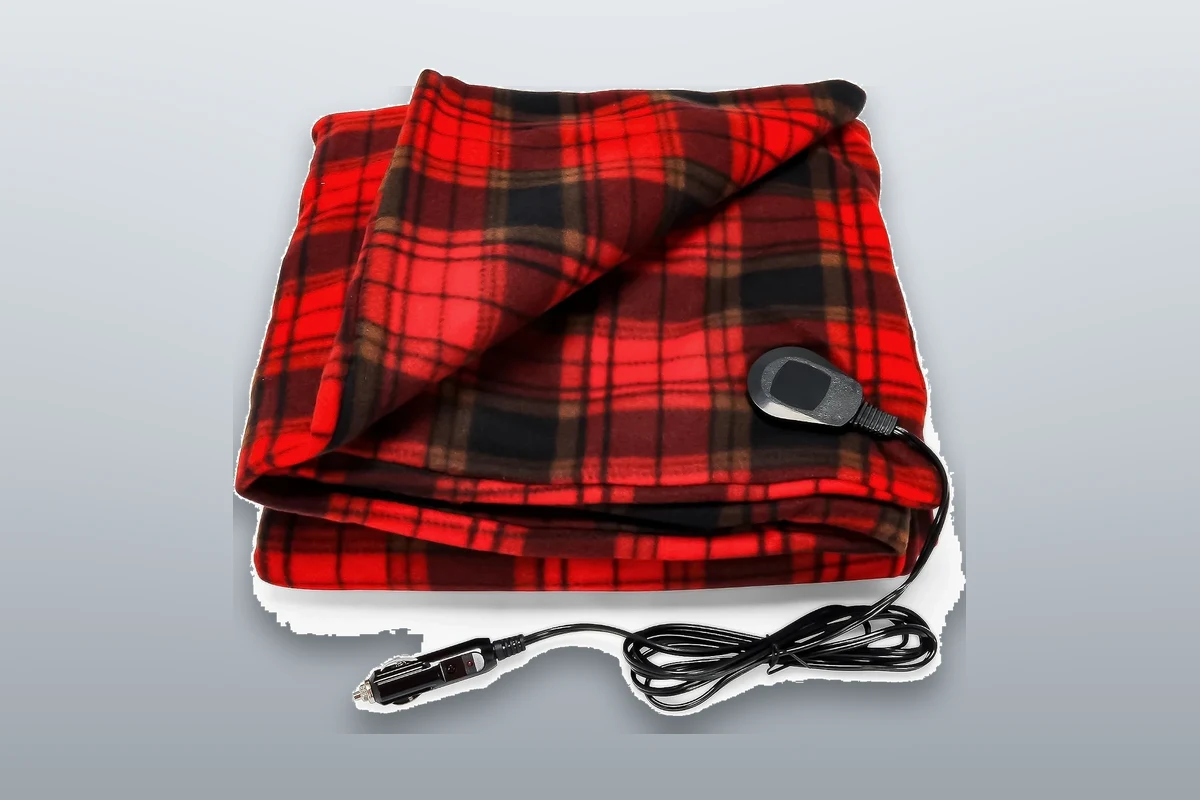
The budget 12V heated blanket. Warms the bunk; the thermostat is simpler than the top pick.
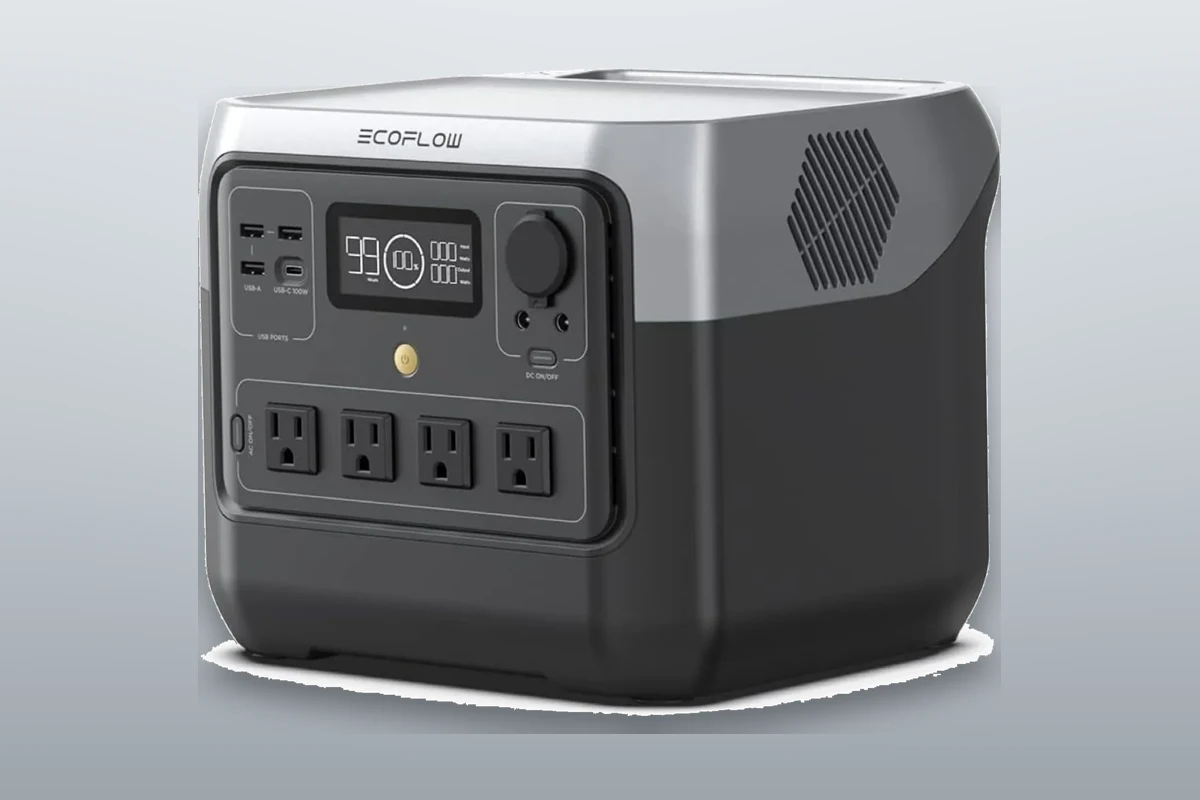
The bigger River for drivers who need the extra headroom. Same fast charging, more weight.
Veteran winter drivers layer heat the way hikers layer clothing, so no single failure owns the night:
None of this replaces a working bunk heater. All of it together carries a driver through the night the heater picks to die — which will be the coldest night of the year, some distance from the nearest town.
Never run an unvented combustion heater — a propane buddy heater, a catalytic heater, a candle for warmth — in a sealed sleeper. Carbon monoxide is colourless and odourless, and it kills drivers every winter. A diesel bunk heater is safe because its combustion is sealed and vented outside by design. Any heat source with a flame and no exhaust pipe leaving the cab does not belong in the cab. No exceptions, and no "just for a few minutes." A battery-powered CO detector in the sleeper is cheap insurance for any truck running combustion heat — including a properly installed bunk heater whose exhaust routing gets damaged on winter roads.
The October heater test, the layering list, and the shutdown sequence on one phone-friendly page: the free Winter Cab Checklist covers the heat plan end to end, before the first −30°C night makes the decisions for you.
More of the cluster: the winter gear hub and the winter driving guide.
The October heater test, the layering list, and the shutdown sequence on one phone-friendly page — free by email, before the first −30°C night makes the decisions for you.
The signup form loads here — click once and it appears.
Roughly 3 litres per hour at idle, so on the order of 30 litres across a 10-hour rest — every night. A diesel bunk heater does the same warming job on roughly a tenth to two-tenths of a litre per hour.
It can if it runs flat-out all night: at about 4 amps, ten hours is a real withdrawal from batteries that also have to crank a cold diesel at dawn. Run the blanket on a timer or thermostat, or run it from a portable power station so the starting batteries stay out of the equation.
A bunk heater only heats — it burns a small amount of diesel in a sealed furnace and blows warm air into the sleeper. An APU is a small engine that generates electricity as well as heat, charging batteries and running cab appliances. The APU is the more complete system; the bunk heater is the simpler, far more common answer.
Yes — that is what it is built for. Combustion is sealed and exhaust is vented outside the cab, unlike unvented propane heaters, which must never be used in a sealed sleeper. A battery CO detector in the bunk is still smart insurance, and the heater deserves an October test run and monthly cycles so it starts when needed.
A correctly installed diesel bunk heater holds a sleeper comfortably through −30°C and beyond — the conditions it was designed for across Canadian winters. Layering still matters at the extremes: curtains closed, an honestly rated sleeping bag, and glass covered will let any heater hold temperature with less work.
Free checklist
The 22-point run-through that catches the heater that can't keep up and the fuel that gels at 2 AM — free by email, print it and keep it in the visor.
Disclosure: The Driver Gear is reader-supported. When you buy through links on this page, we may earn an affiliate commission at no extra cost to you. Scores reflect our editorial comparison methodology — how we test.